Wednesday, June 26, 2013

REPOST: Great Skin: Look Younger from the Neck Down


Most women have spent years pampering their faces but forgetting to take care of some areas of their body. This Health.com article provides some tips on taking care of one's body from head to toe.
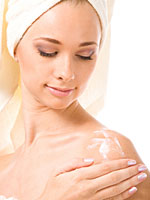


Image Source: health.com
Sure, your face looks young, but what about your hands? Your neck? Your chest? Erase years with these smart strategies.

Wise to the sun’s evil ways, you diligently coat your face in sunscreen every day. Nice work. But as you slather on the sunscreen, you may notice that the skin on your hands doesn’t look quite as ageless as your complexion. “Your hands, along with your neck and chest, are what I call give-away areas,” says Kenneth Howe, MD, a dermatologist in Brooklyn, New York. “They can show your real age, even if you have a youthful-looking complexion.” That’s because these three areas get almost as much damaging sun exposure as your face—but they get a lot less care. Remedy the situation with these strategies that will keep you looking gorgeous from head to toe for years to come.

Take time off your...hands

“Most women notice the first signs of aging on their hands in their early 30s, as the skin begins to thin and lose moisture and sunspots come to the surface,” says Robin Ashinoff, MD, chief of dermatologic and Mohs surgery and cosmetic dermatology at Hackensack Medical Center in New Jersey. In your 40s or 50s, you may also notice a loss of fat, which makes tendons and veins more visible beneath skin. There are ways to remedy the problem, but the easiest fix is to prevent it from happening in the first place by applying a thick layer of moisturizing sunscreen (SPF 30 or higher) immediately after washing your hands.

Simple fixes: Improve the look of your skin by smoothing a retinol cream, like RoC Retinol Correxion Deep Wrinkle Serum, on the backs of your hands every night. Retinol “minimizes fine lines while stimulating cell renewal to even skin tone,” Dr. Howe says. For darker spots, ask your doctor about pre­scription Tri-Luma, a blend of the bleaching agent hydroquinone and the retinoid tretinoin; a 30-gram tube costs $188 and lasts about six months (apply at bedtime for several months).

Intensive solutions: If you still see discoloration, head to your derm for a series of one to three treatments with an Nd:YAG or Q-Switched Ruby laser ($300 to $500), which can erase spots. Injecting hands with a hyaluronic-acid filler like Restylane will restore lost fullness; one to two syringes (costing about $850 per syringe) are usually needed to treat both hands, and results last about six months. If your skin is thoroughly dappled and has a crepey texture, fractional lasers can “sweep the area clean while stimulating a good deal of collagen production, making skin look healthier,” Dr. Howe explains. Unfortunately, the treatments aren’t cheap—you may need up to five at a cost of $1,000 each.

Take time off your...chest

“I often see women in their early 20s who have blotchy, freckled chests—a clear sign that their skin has gotten too much sun,” Dr. Howe says. Eventually, the broken vessels and brown splotches will be joined by wrinkles, loose skin, and white spots, which appear when pigment-making cells sustain so much damage that they simply shut down.

Simple fixes: The best way to keep your decolletage from deteriorating? Cover it with clothing or sunscreen during the day and a lotion that contains antioxidants like co-enzyme Q10 and vitamin E at night; try Gold Bond Ultimate Restoring Skin Therapy Lotion. “The combination of these two ingredients neutralizes sun-induced free radicals and helps reduce wrinkles,” Dr. Ashinoff explains. To improve skin tone and texture, dermatologists often prescribe retinoid creams, like Renova and Avage. If the skin on your chest is too sensitive for these, over-the-counter retinol or retinaldehyde lotions work similarly but not as quickly; try Avène Eluage Cream ($39; www.spalook.com).

Intensive solutions: Glycolic peels ($300 to $500) can lighten spots and improve texture on large areas of skin. Fractional lasers also “do a good job of correcting most aspects of sun damage: freckling, blotchiness, rough texture, and deep lines,” Dr. Howe says. Each treatment costs a bundle (about $1,000), though, and you’ll need between three and six. If discoloration is your main concern, intense pulsed light can wipe out brown spots and red vessels in three to six treatments and is slightly less expensive ($500 to $900 per treatment).

Take time off your...neck

Smoking, genetics, sudden weight loss, the sun—you can blame any or all of these for the current state of your neck. Horizontal grooves and blotchy tone are a result of too much time in the sun without sunscreen. Far more troubling, however, is the dreaded “turkey neck” that may appear thanks to a combination of sagging skin and protruding neck bands (caused by the tightening of a thin sheet of muscle called the platysma).

Simple fixes: Since the skin on your neck is thin and sensitive, all-star ingredients like retinoids and alpha hydroxy acid may be too irritating. Instead, doctors suggest applying face creams that have gentle anti-agers like copper peptides, which boost collagen production and tighten skin over time; find them in Dr. Jeannette Graf, MD, Copper Collagen Infusion.

Intensive solutions: Unfortunately, creams are no match for ultra-lax skin and rigid bands. Botox ($500 to $1,000 a visit) is the best solution because it weakens the platysma muscle, relaxing the tight cords so skin lies flat for up to six months. The radio frequency treatment Thermage can tighten the neck in just one visit, but it’s really pricey, costing upwards of $5,000. It’s a relatively new treatment, so doctors aren’t sure how long results will last. But the company that developed the technology estimates at least several years.

Get more updates on beauty and health through this Lift and Glow Pro Facebook page.

Sunday, June 16, 2013

REPOST: How does vitamin C benefit skin?

How does vitamin C help rejuvenate the skin in such a way that its glow and health are maintained? This Fit and Health article reveals the answer.


It's been centuries since British sailors discovered the key to avoiding scurvy: vitamin C. You probably grew up being told that getting enough vitamin C would ward off colds and other ailments, but now the word is out that vitamin C may not play a big part in staving off the sniffles. However, it does have a vital role in maintaining the health of your skin.

Those sailors and others who couldn't get fresh fruits and vegetables suffered bleeding under the skin, ulcers and joint weakness. That's because vitamin C, also known as ascorbic acid, is key to the production of collagen, a protein that aids in the growth of cells and blood vessels and gives skin its firmness and strength [source: WebMD]. Vitamin C also helps create scar tissue and ligaments, and it helps your skin repair itself [source: Milton S. Hershey Medical Center].

Vitamin C is an antioxidant that slows the rate of free-radical damage -- free radicals are unstable molecules that damage collagen and cause skin dryness, fine lines and wrinkles. New research shows that ascorbic acid 2-phosphate, a derivative of vitamin C, not only neutralizes free radicals, but also reverses DNA damage [source: University of Leicester].

Research suggests that vitamin C may also reduce sunburn caused by exposure to ultraviolet B radiation and prevent the consequences of long-term sun exposure, which can lead to skin cancer [sources: University of Maryland Medical Center, Bouchez]. This doesn't mean you can take vitamins or apply topical vitamin C and then bake safely in the sun, but you can help keep your skin healthy and supple by making sure you get enough of this antioxidant vitamin [source: Bouchez]. Keep reading to learn what foods you can incorporate into your diet to make sure you get the vitamin C your body needs.

Vitamin C Foods Vitamin C can improve your skin, strengthen your immune system, protect against cardiovascular disease and reduce your risk of stroke, and doctors say it's one of the safest and most effective nutrients [source: Zelman]. Vitamin C is water-soluble, which means it's easily absorbed through the water in your body. Your body doesn't store vitamin C, so you must replace your supply every day -- excess amounts are flushed out through your kidneys [source: U.S. Food and Drug Administration].

There are plenty of foods that can help you boost your consumption of vitamin C. If you get the recommended nine daily servings of fruits and vegetables, you're probably meeting the minimum daily recommendations for vitamin C -- in addition to many other vitamins and minerals [source: Zelman]. To ensure your diet includes plenty of vitamin C, eat citrus fruits and vegetables such as bell peppers, cauliflower, broccoli, spinach, collard greens and tomatoes [source: Bouchez]. Although opinions differ on how much vitamin C your body needs, many doctors suggest taking 500 milligrams a day, which can often be found in daily multivitamins or vitamin C supplements. However, don't exceed more than 2,000 milligrams per day -- too much vitamin C may cause stomach irritation [source: Zelman]. 

You can also apply topical vitamin C to your skin to encourage collagen production and fight free radicals. Look for a facial cleanser or moisturizer that contains the L-ascorbic acid form of vitamin C to ensure the vitamin penetrates your skin layers [source: Bouchez].


Find easy ways to look and feel good by visiting this Lift and Glow Pro Facebook page.

Tuesday, June 11, 2013

REPOST: 8 Asian Beauty Secrets to Incorporate into Your Routine

This Yahoo! Shine article shares some steps that American women can incorporate in their beauty regimen.

Some of the biggest beauty trends in recent memory (BB creams, anyone?) have originated in 
Asia, which is way ahead of the West in the skincare game. "Korean women, on average, use 26-27 steps in their beauty regimen, versus American women who only use six to seven," says Global Aesthetician and Skincare and Beauty Expert for Korean skincare brand Amorepacific, Dana Nicolette. What is it that these women know about beauty that I'm missing? I went in search for some of the best Asian beauty secrets to learn how to incorporate them into my current routine. 

1. Brush your skin. While Francine Gingras, VP Global PR for Elizabeth Arden, lived in Japan as a teen (she grew up in Canada), she learned the importance of brushing her face every day with a soft-bristled brush. Gingras, who continues the ritual even today, says it is responsible for keeping her skin toned all these years. It's also said to help prepare your skin, so the serums and creams you put on actually sink in. It seems Americans have caught onto this trend; now almost every beauty buff owns a Clarisonic or a similar face-cleansing device.

2. Slap it on. Gingras also learned a very specific way of applying moisturizer (today she opts for Prevage Anti-Aging Moisture Cream Broad Spectrum Sunscreen SPF 30 ($129, elizabetharden.com)) and makeup. She starts from the bottom of the chin and applies it going up, so her forehead is the last part of the face to be covered. And instead of rubbing product into her face, she slaps it on, another tip she learned from her time in Japan. Most surprising is that Elizabeth Arden herself had a machine with spoon-looking objects attached that gently slapped cream onto women's skin, and that was 102 years ago!

Esther Dong, senior vice president of sales and marketing for 
Korean skincare brand Sulwhasoo, says that women in Korea also believe in slapping their faces to stimulate circulation and elevate the energy level of the skin. 

"They do this seriously and with considerable consistency," says Dong. "Don't be surprised next time you travel to 
Korea and see Korean ladies padding their face with force in the washroom. To them, it is so important that it should not be missed, even when they are on the road." 

3. Make SPF a priority.
 Another huge skin care consideration in Korea is sun protection. 
 "Have you ever seen pictures of an Asian lady with an umbrella under a clear sunny sky?" Dong asks. "Keeping away from the sun is skin care 101 in Asia." 

Whether you use a foundation with built-in sunscreen or you opt for a stand-alone product, like Sulwhasoo Age-Veil UV Protection Cream ($70, sulwhasoo.com), make sure to protect your skin, no matter the weather. 


4. Hydrate throughout the day.
 "Asian women hydrate often throughout the day, and lightly mist facial sprays over the face to refresh their foundation post lunch," says Nicolette. 

Facial mists are starting to catch on in the US, so try Amorepacific Moisture Bound Skin Energy Hydration Delivery System ($35, sephora.com). It was created with bamboo sap to keep skin hydrated for up to 8 hours. 


5. Make sure to polish your skin.
 Victoria Tsai founded skincare line Tatcha after discovering a 200-year-old manuscript that described the daily beauty regimen of a Japanese geisha. She based her products on traditional geisha beauty secrets. One example: Instead of cleansing, toning and moisturizing the skin, like many of us do, a geisha's routine would include polishing, brightening and moisturizing steps. Tatcha Classic Rice Enzyme Powder ($65, tatcha.com) exfoliates without harsh abrasives. 

6. What's good for your body is good for your skin.
 "When you want your body to be healthy, you seek out unprocessed, nutritious and natural foods," says Tsai. "The same goes for your skin." Green tea, ginseng and kimchi are all ingredients that are often infused in Korean skin care. Dr. Jart+ uses these key ingredients in their Detox 02 Cleansing Foam ($24, sephora.com), Renewalist Melting Cream ($38, sephora.com), and their Waterfuse line.
Tsai also points to a home remedy from 
Japan, in which some women save the cloudy water used when washing rice to wash their faces, giving their skin a youthful glow. 

7. Opt for an oil, instead of a cleanser.
 While "oil-free" products rule in the US, oil-based skincare is a popular category in many parts of Asia. "Cleansing oils work so well because oil dissolves oil - makeup, sunscreen and sebum literally melt away when you use a cleansing oil," says Tsai. " The trick is to use one without mineral oil so that it doesn't break you out or leave residue that you have to use another cleanser to remove. Had I discovered these earlier in life, I think I would have saved myself a lot of breakouts and dry patches long ago." 

For a cleansing oil that doesn't contain mineral oil, try Boscia MakeUp-BreakUp Cool Cleansing Oil ($26, sephora.com). 


8. Don't underestimate a good facial.
 "Korean women spend a large sum of their dispensable income on facials," says Dong. "Beyond indulging in high-end beauty products that deliver great results, they also go to the spa every other week!" 

The spa tradition in Japan goes back hundreds of years. "Geishas used to use a complex device called an alchemical still to capture the essence of botanicals," says Tsai. "They would boil water underneath beneficial flowers or leaves, then capture the steam on a swatch of kimono silk. This silk was applied to the face for a nourishing mask, long before masks became known to the wider world."


Do you incorporate any of these secrets into your daily routine?

Lift and Glow Pro helps women maintain their youthful glow. For more beauty tips, visit this Facebook page.

Tuesday, June 4, 2013

REPOST: Saving Face: Six Fashion Week Models Share Their Skin-Care Survival Secrets

This Vogue.com article reveals some of the skin care secrets from six of your favorite super models.


Clockwise from top left: Karlie Kloss; Lindsey Wixson; Liu Wen; Cara Delevingne
Image Source: vogue.com


They may spend their days playing dress up in the industry’s most beautiful clothes, but models endure wear and tear on their skin during Fashion Week that is anything but glamorous. In the makeup chair, they’re dabbed, dipped, and smeared with product, only to be stripped clean and done all over again at the next show. “You might have makeup put on and taken off seven times a day,” says Karlie Kloss, perched backstage at Carolina Herrera. Like many of her peers, she has developed a survival strategy that revolves largely around cleansing, calming, and hydrating her sensitive skin. Here, six of our favorite backstage faces share their guide to complexion perfection—along with a few of the all-around beauty products they won’t leave home without.

CARA DELEVINGNE:

What’s your skin-care survival strategy?

“I’ve been using a lot of natural products. There’s a really amazing shop called Live Live & Organic on East Tenth Street that sells all-natural products. They have this stuff called Bee Yummy Skin Food cream, which just has honey, bee pollen, water, and St. John’s Wort oil. It’s very natural, which is what I need for my skin.”

What’s in your bag?

Anastasia eyebrow gel and a Tangle Teezer hairbrush

JOURDAN DUNN:

What’s your skin-care survival strategy?

“I like to use Sisley’s Radiant Glow Express Mask. I also like to use their radiance serum, which you can put on top of your makeup or under your makeup and it just instantly gives you a glow.”

What’s in your bag?

Hair brush, Johnson’s facial wipes, and Vaseline to use as lip balm

KARLIE KLOSS:

What’s your skin-care survival strategy?

“I have a Clarisonic brush that I use every night to clear out my pores. And I always have dry skin, so moisturizer is really important. I use a drop of Caudalie oil and mix it with my face cream.”

What’s in your bag?

Smith’s Rosebud salve and a packet of hot chocolate

LIU WEN:

What’s your skin-care survival strategy?

“During Fashion Week, you’re using a lot of makeup and it makes your skin really dry. Normally I do a face mask once a week, but during Fashion Week, if I have time, I do one every day. I have some Korean face masks, and sometimes I make them myself, using egg whites and water.”

What’s in your bag?

Estée Lauder lip balm and hand cream

COCO ROCHA:

What’s your skin-care survival strategy?

“The best thing is just to make sure to take off all that makeup at night, and cleanse, and in the morning do the exact same thing. I always try to let my face breathe as much as I can. If I’m hanging out at home, then there’s no need to put on makeup just for the sake of it.”

What’s in your bag?

Giorgio Armani Maestro Eraser Concealer

LINDSEY WIXSON:

What’s your skin-care survival strategy?

“I drink lots of water and use Himalayan bath salts to relax.”

What’s in your bag?

Tropical Traditions coconut oil and Weleda Skin Food moisturizer.

Lift and Glow Pro products help protect the skin from aging. Visit this Facebook page for more information on how to take good care of the skin.

Thursday, May 30, 2013

Skin care: Ten commandments to live by


The summer weather can entice anyone to go out of their house and enjoy the outdoors. But with this come the harsh effects of sun exposure. From dry skin to skin discoloration and sunburn, the effects of the sun on the skin can range from mild to alarming conditions --- therefore, extra care should be given to the skin when a person spends time under the sun.


Image Source: edensoapandcandle.wordpress.com


NBC News shares the ten commandments for keeping the skin healthy and looking great this summer:

1. Using skin protection. Basking in the summer sun without sunscreen or protective clothing is like going out in a battlefield without arms.

2. Honoring the changes of the seasons. Knowing what products to apply on the skin in certain seasons is crucial in achieving maximum protection.


Image Source: blog.mariobadescu.com


3. Buffing the skin. Buffing and exfoliating the skin remove dead skin cells and speed skin regeneration.

4. Engaging in morning and evening anti-aging rituals. Regular skin care routine—one in the morning and another one at night—enhances the skin’s natural beauty.

5. Moisturizing. Moisturizing and hydrating the skin are a must, no matter what time of year it is.


Image Source: newbeauty.com


6. Getting enough sleep. Sleep deprivation has some ill effects on the skin. It releases the stress hormone called cortisol and leaves the skin dry and acne-prone.

7. Not pricking or popping pimples and zits. Popping zits will only spread the bacteria to other areas of the skin, and the skin can develop skin trauma.

8. Loving the whole body. Skin in other parts of the body should also be taken care of. A person should focus not only on the skin on the face, but also on the skin in the lower areas of the body.


Image Source: besskincare.com

9. Exercising. Getting pumped up increases blood circulation and regulates stress hormones, giving the person a beautiful glow.

10. Eating fish, fruits, and vegetables. Eating food rich in phytochemicals and antioxidants keeps the skin smooth and looking young.


Image Source: webmd.boots.com


The summer months require added skin protection. Taking good care of the skin can offer a lifetime of health benefits.

This Lift and Glow Pro Facebook page provides more information on how to protect your skin from harsh elements.

Tuesday, May 28, 2013

REPOST: How to stay safe from summer health hazards

Before enjoying the summer, read these health tips from Today to avoid summer health hazards.  Read on ... 


With temperatures rising and summer just around the corner, everyone’s planning fun activities like hiking, picnicking and barbecuing.

Dr. Roshini Raj shared some safety tips with TODAY to keep this summer safe and help you avoid some of the season’s more common health hazards.

If you’re going to be outside hiking and picnicking in areas that haven’t been cleared of plants like poison ivy, poison oak and poison sumac, Raj suggests becoming familiar with the appearance of these pesky plants.

“It’s really important to recognize these plants,” said Raj, an attending physician at NYU Medical Center/Tisch Hospital in New York City. “They all have urushiol, which is a type of oil that can cause a terrible rash.”


                                       Image Source: Today.com


It’s contact with the oil that causes the small red itchy bumps on your skin, Raj said.  What many people don’t know is that the oil, which can stick to your skin and clothes, can be very long-lived.

“When that oil sticks to your clothes it can last for years,” Raj said. “You might have a sneaker, for example, that you put away in the closet and when you bring it out in the winter you can get that rash again. So you want to make sure if you’ve come in contact with any of these plants that you really wash your clothes carefully.”

And it’s not just your clothes that you have to worry about. Pets can run through patches of the plants and pick up the oils on their coats. While the animals don’t react, you can develop a rash just by touching them.

“So you want to wash your pets if your pets are running around in them,” Raj said of the plants.

If you’ve got any of these plants growing around your house, it’s best to get rid of them, though you need to do so carefully. Make sure you’re wearing gloves to protect your hands and don’t ever try to dispose of them by burning. If you breathe in smoke contaminated with the oil it can really irritate your lungs, she said.

If you do come in contact with urushiol and a rash develops, Raj suggests putting Calamine lotion or hydrocortisone cream directly on the skin. Taking oral Benadryl can also quiet the itching, she said.

As it turns out, you can get an itchy rash without even touching a plant. With the extremely hot temperatures of summer, you can develop heat rash.

“Heat rash is not just for babies,” Raj said. “It’s what happens when your pores get clogged so you can’t perspire and release the heat. That can cause tiny little bumps that can be itchy.”

The best way to avoid heat rash is to make sure you’re wearing clothing that wicks away moisture. Most important is underwear, Raj said, “because you get it in those very moist and warm areas.”

Just as with poison ivy, the best topical treatment is hydrocortisone ointment. But keep in mind, Raj said, that the rash could be a sign that you are overheated and at risk for heat stroke. So, “get in a cool area because heat stroke is very serious.”

Another summer hazard: bug bites, some of which can be dangerous.
One of the most potentially dangerous bites comes from the deer tick, Raj said. The tick, which is the size of a pinhead, can transmit bacteria that can lead to Lyme Disease.
Raj suggests checking yourself and your children every evening for ticks.

“The tick has to be on your skin for two to three days it can actually transmit the disease,” she said. “So you can prevent it if you can find that tick.”

Even with careful inspections, it’s possible to miss the ticks. A sure sign that you’ve been bitten and infected is a bull’s eye rash, Raj said. If you see the rash, you need to go to a doctor and get antibiotics, because “untreated it can lead to severe neurological issues.”
Another big area for concern is food safety. While grilling and picnicking can be a lot of fun, you need to be careful with your food, Raj said.

Raw meat should be kept away from other foods on a separate platter, and handled with different utensils. And when you grill, use a thermometer to check that the meat is done because “you can’t judge it from the outside," Raj said. "Even if it’s charred on the outside, it could be raw on the inside.”

Perishables, like macaroni and potato salads, need to be kept cold. “You don’t want anything out for more than two hours,” Raj said. “Or only one hour if it’s over 90 degrees.”

She suggests keeping drinks in a separate cooler “because that is the one that people are going to be opening all the time.”

As for leftovers – you don’t really want to keep anything that’s been outside the cooler, Raj said. “If it’s been in the cooler the whole time then you may be able to use it, but if not, then just throw it away.”


Lift and Glow Pro helps protect you from premature wrinkling caused by sun exposure.  Find out more from this Facebook page.

Monday, May 27, 2013

REPOST: The Right Moisturizer for Smooth Skin in Your 30s, 40s, 50s

Even if you're taking good care of your skin, you'll probably start noticing fine lines and wrinkles in your 30s. This Health.com article will help you find products designed specifically for your skin at every age.

skincare-aging
Image Source: health.com
Today’s skin moisturizers are worlds better than the one you started using in your 20s. Here’s how to find your perfect product for gorgeous grown-up skin.

In Your 30s

What’s Going On

Luckily, your skin is in good shape, so you don’t have to waste a second worrying about deep wrinkles. However, you might notice fine lines and age spots, says Anne Chapas, MD, a 35-year-old dermatologist in New York City. Also, “women in their 30s may have redness from sun damage or flushed skin caused by rosacea,” a skin condition that often appears for the first time in your 30s, she notes. Another occasional issue? Under-eye circles. (Blame genetics or the stress and sleepless nights this decade often brings.)

What You Can Do...Your morning routine

After cleansing, hydrate and protect your skin with a lightweight lotion that has sunscreen. If you have any unwanted rosiness, look for one that also contains feverfew. “It’s a natural ingredient that reduces redness,” Dr. Chapas says. On mornings when dark under-eye circles are a problem, apply a cream that has caffeine, which helps shrink capillaries so discoloration is less noticeable.

Your evening routine

Now is the time to start using a night cream that treats fine lines and your first age spots. Look for one with ingredients like arginine, an amino acid that helps fade spots, and retinol, which “helps build collagen and reduce fine lines,” according to Dr. Chapas. If you still get occasional breakouts, Dr. Chapas says a prescription-strength retinoid like Retin-A is a good idea because it treats pimples and signs of aging.

Your best Moisturizers

Eye cream with caffeine: Olay Professional Pro-X Eye Restoration Complex ($42)

Lotion with SPF and Feverfew: Aveeno Ultra-Calming Moisturizer SPF 30 ($14.99)

Night cream with Arginine and Retinol: Neutrogena Ageless Intensives Deep Wrinkle Night ($19.99)

In Your 40s

What’s Going On

This decade brings lots of happiness—you’re enjoying great sex, and studies show your confidence is high. Unfortunately, all that smiling you’re doing may reveal crow’s-feet and lines at the sides of your mouth.

“Estrogen levels decline in your 40s, decreasing collagen levels and making your skin thinner and more prone to wrinkling,” says Jessica Wu, MD, a 41-year-old dermatologist in Los Angeles. Plus, those spots that looked like cute freckles 10 years ago now may appear larger.

What You Can Do...Your morning routine

By now you probably know that you should apply a moisturizer with sunscreen every morning, but Dr. Wu recommends stepping it up to one that also has antioxidants. “They boost the protective power of your skin, helping to prevent more age spots,” she says.

Your evening routine

At night, use a moisturizing cream that contains retinol, which speeds the exfolia­tion of dead skin cells, giving your complexion its glow back. As for the lines around your eyes? Retinol can help there, too. According to Dr. Wu, most women in their 40s could benefit from using an over-the-counter eye cream with retinol or a prescription-strength retinoid. “Last year, I started using Renova, a prescription-strength retinol cream, to treat the fine lines that I’m seeing around my eyes,” Dr. Wu says.

Your best Moisturizers

Day moisturizer with sunscreen and antioxidants: Biore Dual Fusion Moisturizer + SPF 30 ($14.99)

Eye cream with Retinol: L’Oreal Paris Revitalift Anti-Wrinkle & Firming Eye Cream ($16.59)

Night cream with Retinol: La Roche-Posay Biomedic Retinol 30 ($54)

In Your 50s

What’s Going On

You finally have a little time to focus on yourself. Plus, those healthy habits you have picked up over the years (regular workouts, eating fresh farmers’ market produce) are great for your skin. Still, there is no hiding the signs of a life well-lived. “Your 50s are when you may see deeper wrinkles and a hollowness around your eyes that causes shadows,” says Audrey Kunin, MD, a 50-year-old dermatologist in Kansas City, Missouri, and the founder of DERMADoctor. And menopause (as well as perimenopause) dries your skin and disrupts its ceramide barrier, which can lead to sensitivity.

What You Can Do...Your morning routine

Smooth on a cream (they tend to be more moisturizing than lotions) that has antioxidants and SPF as well as ceramides, which boost hydration and reinforce your skin’s protective barrier. For under-eye discoloration, look for a moisturizing eye cream with vitamin K. “Because you have less fat under your skin at this age, the blue color of blood vessels close to the skin surface becomes more visible,” Dr. Kunin explains. In one study, vitamin K was found to improve the look of dark under-eye circles, perhaps because it helps blood clot, preventing seepage from the capillaries under your eyes.

Your evening routine

There are plenty of ways to describe the dry skin this decade brings—papery, parched—but, no matter what you call it, it’s treatable. To rehydrate at night, smooth on a cream that has rich moisturizing ingredients, like shea butter. And since wrinkles are more apparent on dry skin, make sure your product pick also has retinol. “It builds collagen, which can help make wrinkles less noticeable,” Dr. Kunin says. Another option? Prescription-strength Renova, which contains a more potent form of retinol and a moisturizing base.

Your best moisturizers

Eye cream with vitamin K: Clarins Eye Revive Beauty Flash ($46)

Day cream with sunscreen and Ceramides: Elizabeth Arden Ceramide Plump Perfect Ultra Lift and Firm Cream SPF 30 ($68)

Night cream with shea butter and Retinol: RoC Retinol Correxion Deep Wrinkle Night Cream ($19.99)

For your weekly dose of beauty tips, follow this Lift and Glow Pro Twitter page.